Enviroesca - phân tích bề mặt hoá học dưới điều kiện môi trường
EnviroESCA có cách tiếp cận mô-đun độc đáo đối với thiết kế hệ thống, kết hợp ưu điểm của một số hệ thống ESCA chuyên dụng được tích hợp trong một cấu trúc duy nhất. Nó có thể thích ứng để phù hợp với các điều kiện thí nghiệm khác nhau thông qua việc sử dụng các mô-đun môi trường mẫu chuyên dụng có thể hoán đổi cho nhau. Như trong bất kỳ thiết bị ESCA thông thường nào, máy phân tích năng lượng điện tử và nguồn tia X là những thành phần chính của EnviroESCA. Nhưng kết hợp với các hệ thống xử lý khí và chân không tự động, tiên tiến của SPECS, các điều kiện làm việc đáng tin cậy trong phạm vi áp suất từ chân không cực cao đến hàng trăm mbar hiện có thể thực hiện được. Sự kết hợp này cho phép người dùng nghiên cứu ngay cả những mẫu khó thực hiện nhất từng không tương thích với các thế hệ thiết bị ESCA trước. Hơn nữa, môi trường không khí khi bị ion hóa cung cấp các ion và điện tử năng lượng thấp, dẫn đến một quá trình tự bù điện tích được gọi là là bù điện tích môi trường. Do đó, gần như mọi mẫu cách điện đều có thể được mô tả mà không cần các thành phần bổ sung
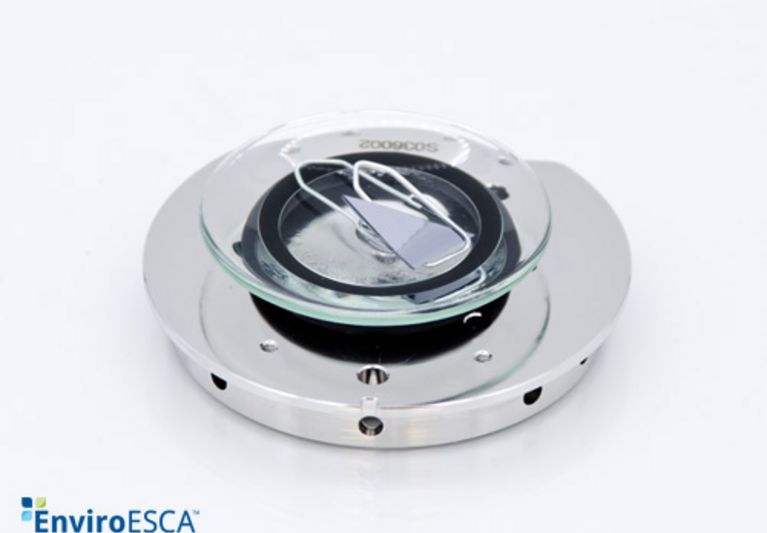
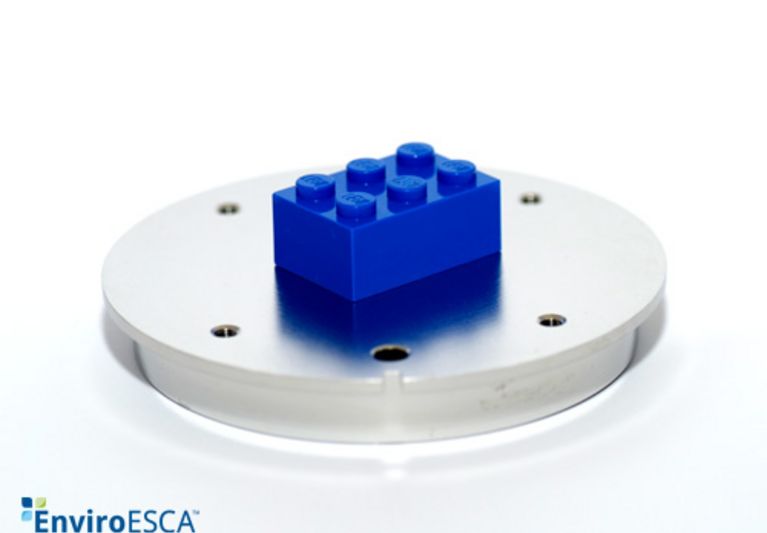
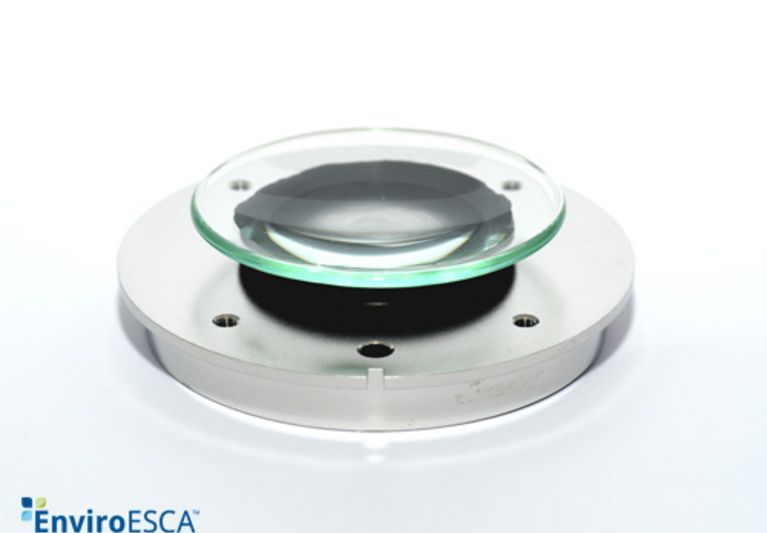
Môi trường chứa mẫu bên trong EnviroESCA được tạo ra tạo điều kiện thuận lợi và phù hợp nhất trong việc mô tả các đặc tính của các vật liệu có thể không tương thích với UHV: Yêu cầu nghiêm ngặt về UHV của XPS thông thường được bỏ qua bên trong trong EnviroESCA. Các mô-đun môi trường mẫu chuyên dụng được cung cấp dưới dạng các đơn vị thông minh cho các loại mẫu và ứng dụng khác nhau. Các mô-đun được trang bị tất cả các thành phần liên quan như bàn mẫu, buồng làm sạch plasma và xử lý khí.Tất cả những yêu cầu của khách hàng đều có thể dễ dàng thực hiện đồng thời được thời gian được rút ngắn một cách tối đa và chỉ mất trong vài phút.
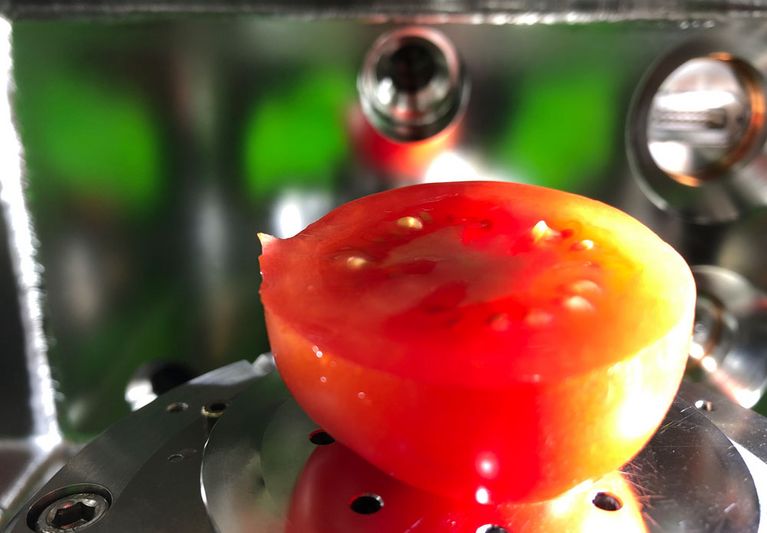
In this note we present first NAP-XPS results from a fresh tomato and apple using the EnviroESCA. Portions of tomato and apple were introduced into the system and the pressure was stabilized at 10 mbar. Different regions on the surface were studied and the photoelectron spectra show significant chemical differences between these regions. This study demonstrates the unique NAP XPS capabilities of the EnviroESCA and extends the field of applications to (processed) food samples and other natural or biological samples that could not be studied by XPS up to now.
In this note we present first AP-XPS results from a commercial liquid electrolyte for lithium ion battery production recorded at 10 mbar in the EnviroESCA. The solution is LiPF6 in EC/DMC as a common battery electrolyte. First we analyzed the LiPF6 solution in its vapor and liquid phase. In a second step we immersed V2O5, a typical cathode material, in this solution. Photoelectron spectra show significant chemical differences on the studied surfaces. This proof of principle study shows the enormous potential of the EnviroESCA for AP-XPS investigations of solid-liquid interfaces and the simplicity of the experimental setup.
This application note describes how EnviroESCA can be used to analyze the surface of polymers and bulk insulating material. EnviroESCAs ability to perform X-Ray Photoelectron Spectroscopy (XPS) at non vacuum conditions shows its main advantage when being applied to insulating material. Specimens that tend to charge up under vacuum conditions and need to be extensive charge compensated with expensive low energy electron and low energy ion sources can be measured with ease and without the problem of overcompensation.
In this study we show how EnviroESCA can be used to analyze the surface of superabsorbent polymers under different environmental conditions. EnviroESCA’s ability to perform X-ray Photoelectron Spectroscopy (XPS) under ambient conditions shows its main advantage when being applied to insulating material that change their surface (chemistry) when they come in contact with different liquids and gases - in this case water. Specimens that tend to charge up under vacuum conditions can be measured with ease.
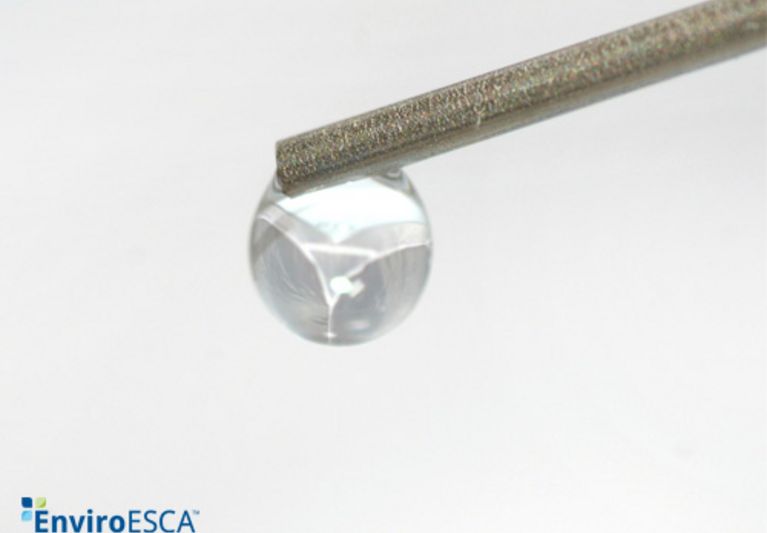
In this study we present the capabilites of EnviroESCA to analyze the surface of various aqueous solutions under near ambient pressure conditions. Such investigations of aqueous solutions are of paramount importance due to the vast number of essential water based processes in nature and industry.
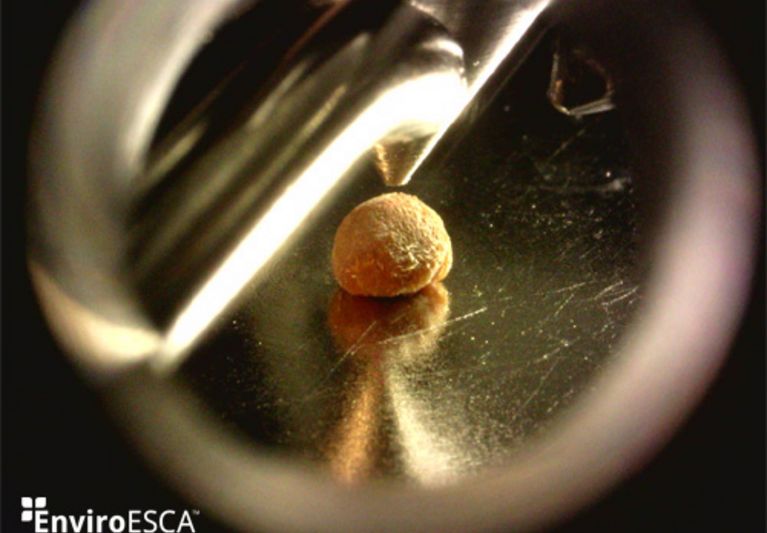
A single human urinary stone (urolith) was characterized using EnviroESCA. The result of surface chemical analysis of the as received samples is presented. Charge neutralization on this insulating material is accomplished by Environmental Charge Compensation.
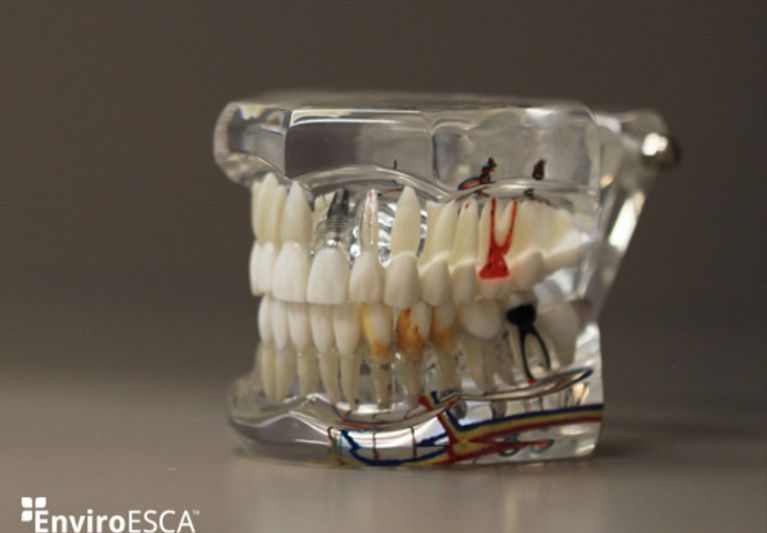
Human teeth from an adult and a baby were studied using EnviroESCA. The results of surface chemical analysis of the as-received human tissues samples are presented. Neutralization of the insulating bio-material is accomplished by Environmental Charge Compensation enabling X-ray Photoelectron Spectroscopy (XPS) on tissues as tooth or bone.
Biological mineral samples from a cuttlefish (sepia) were studied using EnviroESCA. The results of surface chemical analysis of the native and ion implantation treated samples are presented. Neutralization of the insulating biomaterial is accomplished by Environmental Charge Compensation enabling X-ray Photoelectron Spectroscopy (XPS) on tissue samples.
This application note presents how EnviroESCA can be used to analyze samples during heating under near ambient pressure conditions using various gas atmospheres. Such investigations of surfaces at elevated temperatures and pressures are of paramount importance for catalysis in nature and industry.
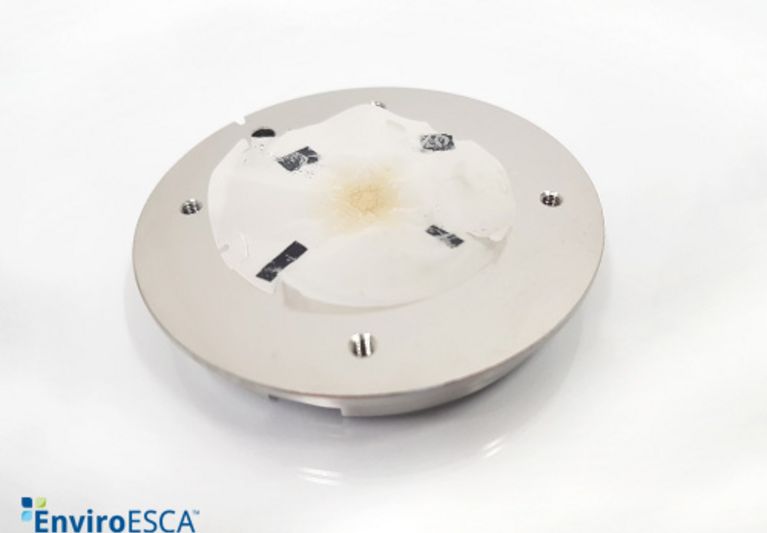
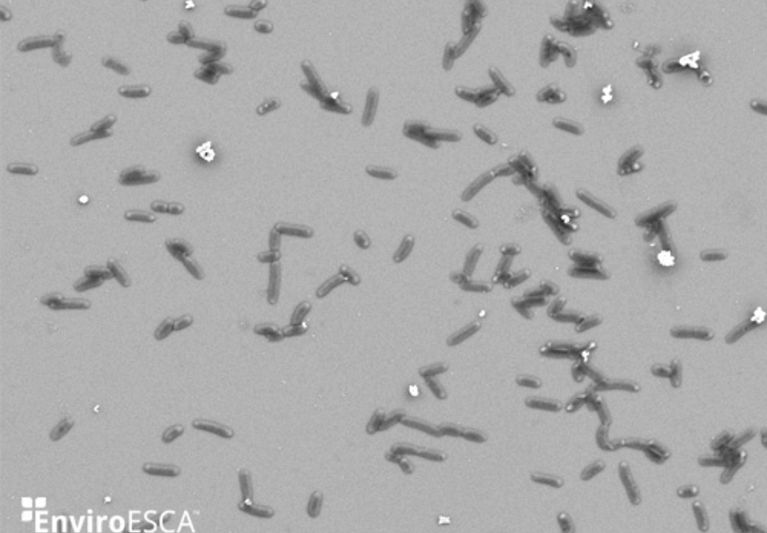
This application note presents how EnviroESCA can be used to analyze bacterial samples under near ambient pressure conditions in various states of hydration using different levels of humidity. Such investigations of bacterial cell wall surfaces in their hydrated state are essential for studying biological interfaces at work.
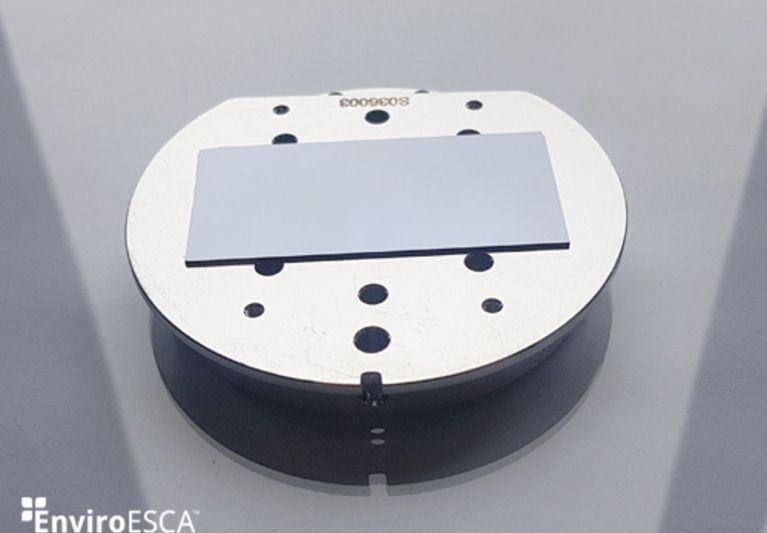
This application note presents how EnviroESCA can be used to analyze E. coli biofilms on silicon under near ambient pressure conditions in various states of hydration. Such investigations of the outer bacterial cell surface in their hydrated state are essential for studying biological interfaces at work.
This application note presents how the optional GCIB source at the EnviroESCA can be used to clean samples prior to XPS analysis to get reproducible analytical data and reliable quantification results. Moreover, Argon cluster Arn⁺ (n=500-5000) sputtering and depth profiling of (bio)organic samples is possible which cannot be done when using monoatomic Arn+ sputtering.
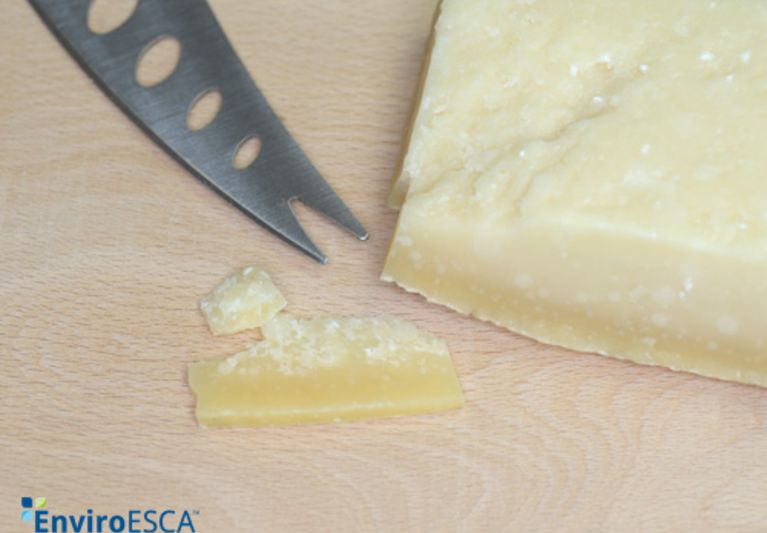
This application note presents how EnviroESCA can be used to analyze the surface of food samples, e.g., Italian hard cheese. Due to the advanced vacuum system of EnviroESCA the surface analysis of Food samples even in the presence of fat and oils or volatiles is performed without problems.
Results of the surface analysis of four paper samples obtained in EnviroESCA are presented. Neutralization of this insulating biopolymer is accomplished by Environmental Charge Compensation enabling X-ray Pho-toelectron Spectroscopy (XPS) on such important natural material with ease.
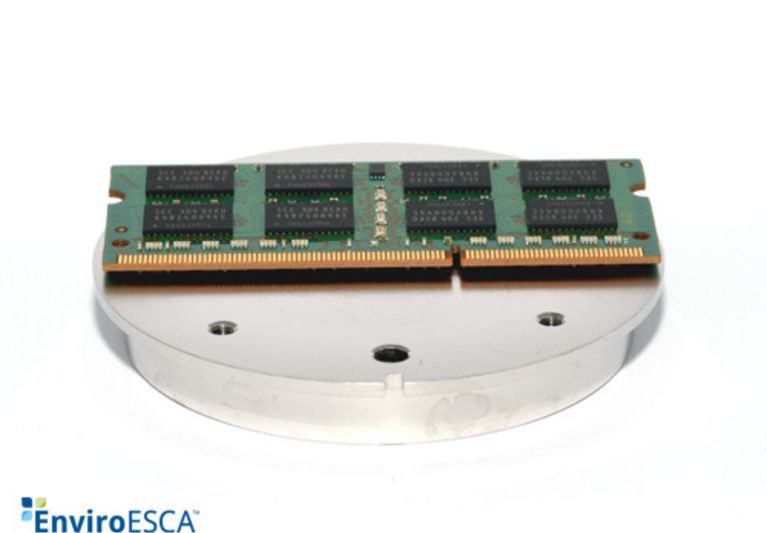
This application note introduces EnviroESCA as a tool for real world device inspection for microelectronics. A printed circuit board was taken directly from the sales packaging and was investigated with XPS. The measurements concentrate on the crucial parts like contact surfaces and soldering joints. EnviroESCA and near ambient pressure XPS (NAP-XPS) in quality control applications aims to optimize manufacturing processes and device quality in general.
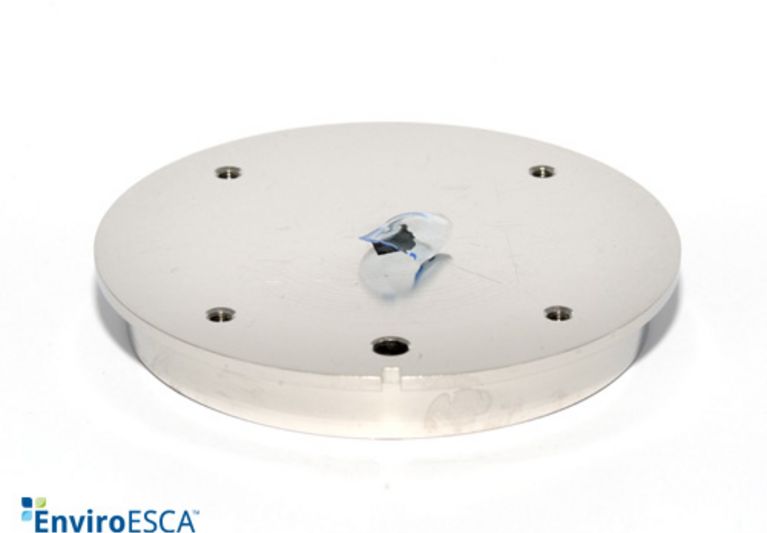
In this application note we analyze the surface of water filled hydrogels with EnviroESCA, Here, contact lenses serve as an example for medical and biomaterials. The advantage of such investigations under non ultrahigh vacuum conditions is demonstrated and results from wet and dry samples are compared.
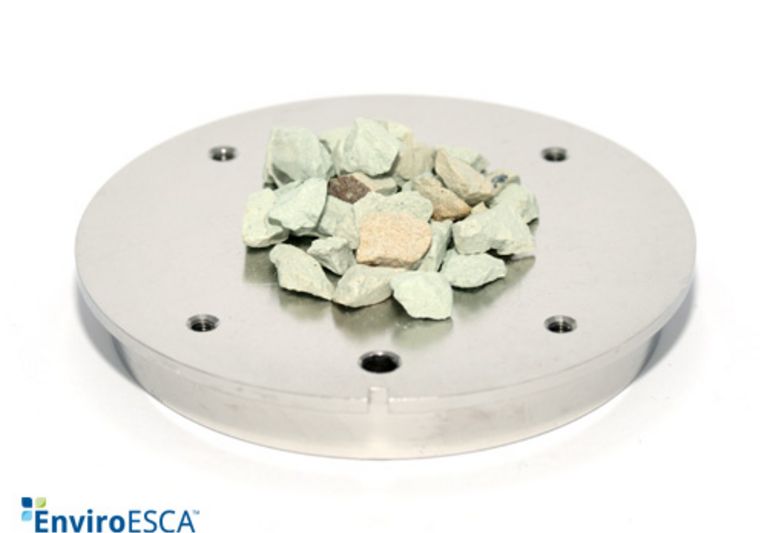
In this note we demonstrate how the surface of Clinoptilolite, a natural zeolite, can be analysed with EnviroESCA. It describes how the Environmental Charge Compensation can be used to compensate for charging of the sample surface to be able to measure X-ray Photoelectron Spectra with ease.
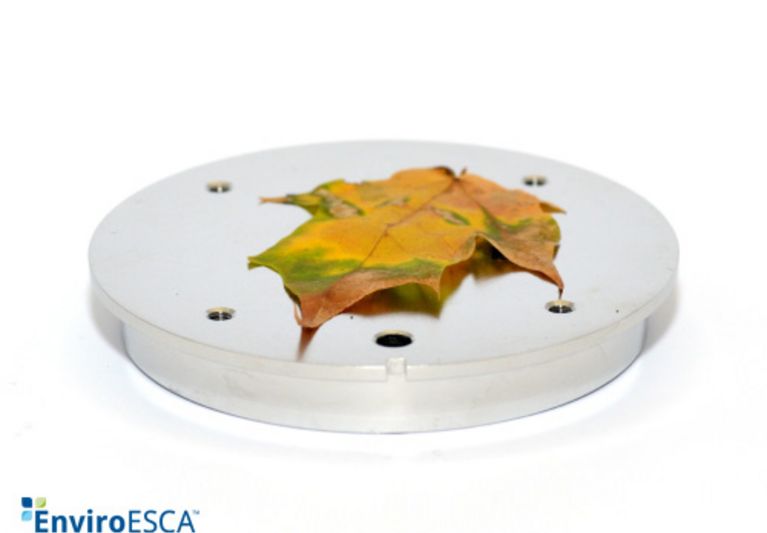
This application note presents the application of EnviroESCA to the field of biology and surface spectroscopy of biological samples. X-ray Photoelectron Spectroscopy (XPS) measurements on different sites of a leaf will be discussed. It will be shown that XPS is able to detect residues of calcium chloride, being used as a fertilizer, on the leafs surface.
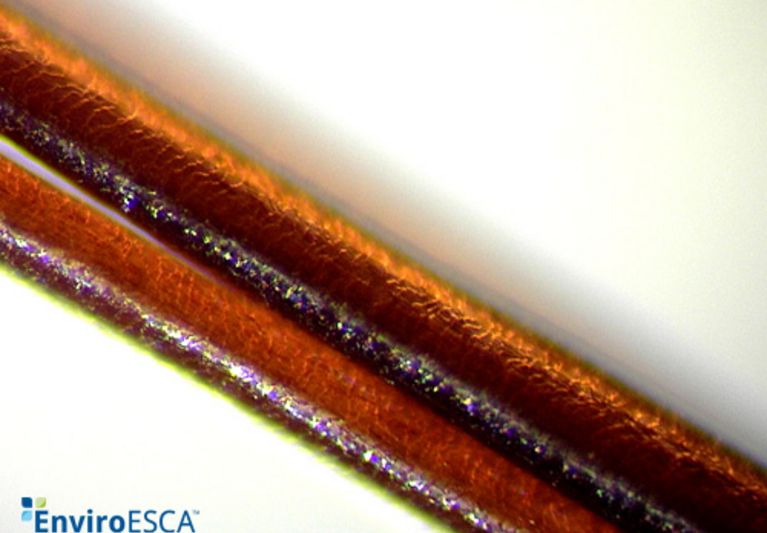
This application note presents the application of EnviroESCA to the field of Cosmetic Sciences and Forensic Sciences. Near Ambient Pressure X-ray Photoelectron Spectroscopy (NAP-XPS) measurements on human hair treated with different personal hair care products.
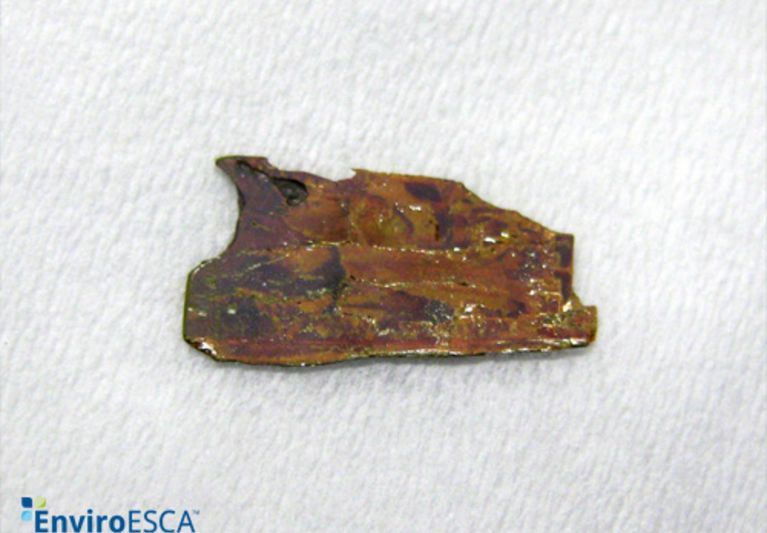
In the present application note EnviroESCA is used for chemical Analysis in the field of Archaeometry. Besides the ability of Near Ambient Pressure X-ray Photoelectron Spectroscopy (NAP-XPS) to analyze the surface composition of metallic and nonmetallic specimens, EnviroESCA allows for a nondestructive analysis of artifacts without special pretreatment procedures.
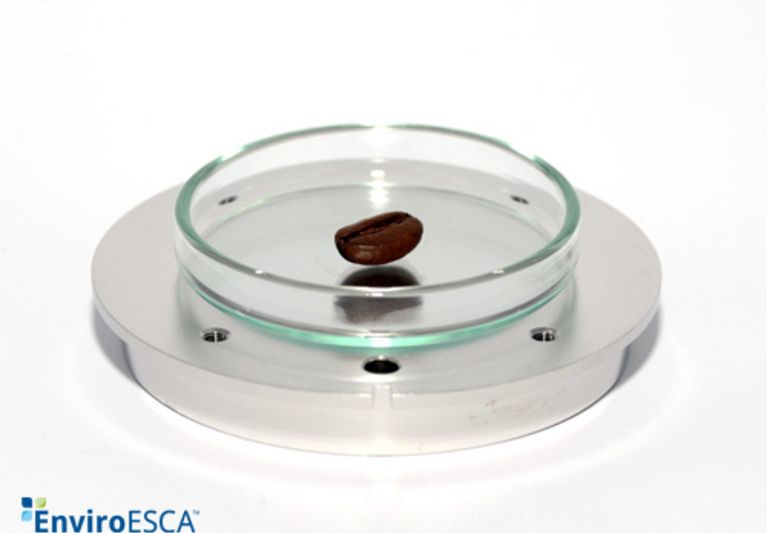
The Analysis of food and natural products under environmental conditions is of great importance due to their daily use and direct interaction with humans during consumption. In this study we investigated a roated coffee bean. Charge compensation of this insulating natural product is accomplished by Environmental Charge Compensation enabling X-ray photoelectron spectroscopy on such biological material with ease.
This application note presents how EnviroESCA can be used to analyze the surface of ionic liquids in contact with gases under application relevant conditions in the near ambient pressure region.
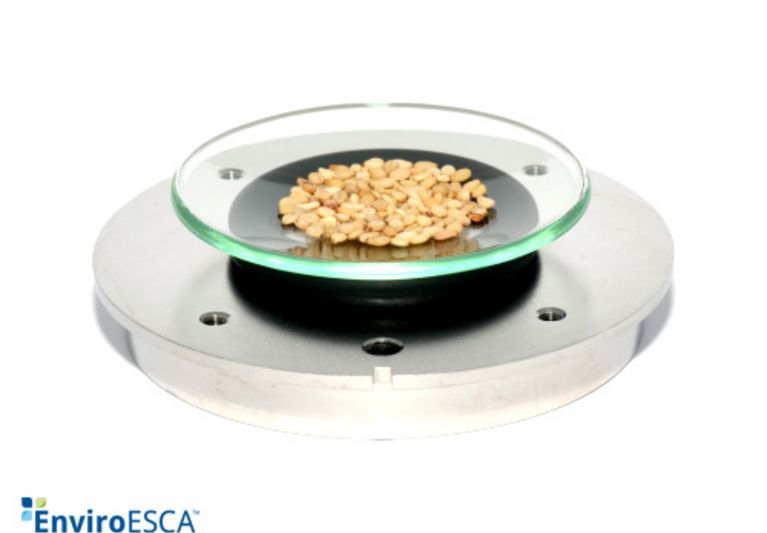
Results of the surface analysis of untreated food samples, e.g., sesame seeds, measured with EnviroESCA are presented. High resolution and high quality spectra are recorded using Environmental Charge Compensation even for samples in bulk quantities.
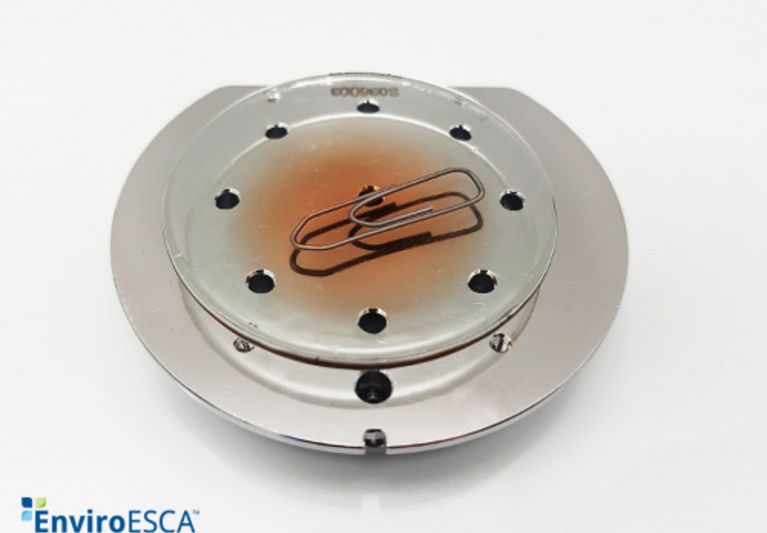
In this note we present (N)AP XPS results from the first comparative ex-situ and operando corrosion study on the reaction of commercial paper clips in concentrated vinegar solution containing 25% acetic acid.
Near ambient pressure–x-ray photoelectron spectroscopy (NAP-XPS) is a less traditional form of XPS that allows samples to be analyzed at relatively high pressures, i.e., at greater than 5000 Pa. NAP-XPS can probe moderately…
Near ambient pressure – X-ray photoelectron spectroscopy (NAP-XPS) is a less traditional form of XPS that allows samples to be analyzed at relatively high pressures, i.e., at greater than 5000 Pa. NAP-XPS can probe…
Here we present a study on agarose thin-film samples that represent a model system for the exopolysaccharide matrix of biofilms. Povidone-iodide (PVP-I) was selected as an antibacterial agent to evaluate our XPS-based methodology…
Seeds are vulnerable to physical and biological stresses during the germination process. Seed priming strategies can alleviate such stresses. Seed priming is a technique of treating and drying seeds prior to germination in order…
Polyethylene production through catalytic ethylene polymerization is one of the most common processes in the chemical industry. The popular Cossee-Arlman mechanism hypothesizes that the ethylene be directly inserted into the…
Pseudomonas fluorescens (Gram-negative) bacteria purchased from Leibniz Institute DSMZ-German Collection of Microorganisms and Cell Cultures were analyzed using high-resolution x-ray photoelectron spectroscopy at near ambient…
Using the nascent band theory of solids, Cabrera and Mott designed in the late 1940s a model for the low-temperature oxidation of metals that still stands today as a landmark. The core assumption is that an electric field set up…
Surface-supported metal-organic frameworks HKUST-1 (Hong Kong University of Science and Technology) were used as a model system for a development of a near ambient pressure (NAP) XPS based approach to investigate interaction with…
Bacteria generally interact with the environment via processes involving their cell-envelope. Thus, techniques that may shed light on their surface chemistry are attractive tools for providing an understanding of bacterial…
Ionizing radiation damage to DNA plays a fundamental role in cancer therapy. X-ray photoelectron-spectroscopy (XPS) allows simultaneous irradiation and damage monitoring. Although water radiolysis is essential for radiation…
Interfacially confined microenvironments have recently gained attention in catalysis, as they can be used to modulate reaction chemistry. The emergence of a 2D nanospace at the interface between a 2D material and its support can…
Interfacially confined microenvironments have recently gained attention in catalysis, as they can be used to modulate reaction chemistry. The emergence of a 2D nanospace at the interface between a 2D material and its support can…
In this paper, we present for the first time the obtaining and characterization of new antibacterial and biocompatible nano-ZnO–bacterial cellulose (BC) material with controlled interfaces for studying in vitro microorganisms (…
The production of furfuryl alcohol from furfural hydrogenation in gas phase is of great significance for the valorization of biomass. The existing catalyst for this transformation suffers from high cost and complex preparation…
Near-ambient pressure-x-ray photoelectron spectroscopy (NAP-XPS) is a less traditional form of XPS that allows samples to be analyzed at relatively high pressures, i.e., at ca. 2500 Pa. With NAP-XPS, XPS can probe moderately…
Modulating electronic structure of graphene overlayers is highly demanding for its potential applications in microelectronics, sensors, and catalysis, which however remains a grand challenge. Here, we report electrochemistry…
Near ambient pressure-x-ray photoelectron spectroscopy (NAP-XPS) is a less traditional form of XPS that allows samples to be analyzed at relatively high pressures, i.e., at greater than 2500 Pa. With NAP-XPS, XPS can probe…
Near-ambient pressure x-ray photoelectron spectroscopy (NAP-XPS) is a less traditional form of XPS that allows samples to be analyzed at relatively high pressures, i.e., at greater than 2500 Pa. With NAP-XPS, XPS can probe…
Hydrothermal carbonisation (HTC) has been demonstrated to be a sustainable thermochemical process, capable of producing functionalised carbon materials for a wide range of applications. In order to better apply such materials,…
Near ambient pressure-x-ray photoelectron spectroscopy (NAP-XPS) is a less traditional form of XPS that allows samples to be analyzed at relatively high pressures, i.e., at greater than 2500 Pa. With NAP-XPS, XPS can probe…
Near-ambient pressure XPS (NAP-XPS) is a less traditional form of XPS that allows samples to be analyzed at relatively high pressures, i.e., at 2500 Pa or greater. With NAP-XPS, XPS can analyze moderately volatile liquids,…
In this topical review we catagorise all ambient pressure x-ray photoelectron spectroscopy publications that have appeared between the 1970s and the end of 2018 according to their scientific field. We find that catalysis, surface…
The oxides, hydroxides, and oxo-hydroxides of iron belong to the most abundant materials on earth. They also feature a wide range of practical applications. In many environments, they can undergo facile phase transformations and…
Near ambient pressure-x-ray photoelectron spectroscopy (NAP-XPS) is a less traditional form of XPS that allows samples to be analyzed at relatively high pressures, i.e., at greater than 5000 Pa. With NAP-XPS, liquids, biological…
Dry reforming of methane (DRM) involves the conversion of CO2 and CH4, the most important greenhouse gases, into syngas, a stoichiometric mixture of H2 and CO that can be further processed via Fischer–Tropsch chemistry into a…
In this article, we present Near Ambient Pressure (NAP)-X-ray Photoelectron Spectroscopy (XPS) results from model and commercial liquid electrolytes for lithium-ion battery production using an automated laboratory NAP-XPS system.…
Near-ambient-pressure x-ray photoelectron spectroscopy (NAP-XPS) and x-ray-induced Auger electron spectroscopy were used to characterize gas-phase carbon monoxide, CO(g). In this submission, the authors show the survey, valence…
Near-ambient pressure–x-ray photoelectron spectroscopy (NAP-XPS) is a less traditional form of XPS that allows samples to be analyzed at relatively high pressures, i.e., at ca. 2500 Pa, or even higher in some cases. With NAP-XPS,…
Near ambient pressure - x-ray photoelectron spectroscopy (NAP-XPS) is a less traditional form of XPS that allows samples to be analyzed at relatively high pressures, i.e., at 2500 Pa or higher. With NAP-XPS, one can analyze…
Near ambient pressure x-ray photoelectron spectroscopy (NAP-XPS) is a less traditional form of XPS that allows samples to be analyzed at relatively high pressures, i.e., at ca. 2500 Pa, or higher in some cases. With NAP-XPS, XPS…
Near ambient pressure-x-ray photoelectron spectroscopy (NAP-XPS) is a less traditional form of XPS that allows samples to be analyzed at relatively high pressures, i.e., at ca. 2500 Pa, or higher in some cases. With NAP-XPS, XPS…
Near-ambient pressure x-ray photoelectron spectroscopy (NAP-XPS) is a less traditional form of XPS that allows samples to be analyzed at relatively high pressures, i.e., at greater than 2500 Pa. With NAP-XPS, XPS can probe…
Near-ambient pressure x-ray photoelectron spectroscopy (NAP-XPS) is a less traditional form of XPS that allows samples to be analyzed at relatively high pressures, i.e., greater than 2500 Pa. With NAP-XPS, XPS can probe…
Near-ambient pressure x-ray photoelectron spectroscopy (NAP-XPS) is a less traditional form of XPS that allows samples to be analyzed at relatively high pressures, i.e., greater than 2500 Pa. With NAP-XPS, XPS can probe…
Porous silicon (PSi) offers extremely attractive optical, electronic and biofunctional properties for the development of biosensors. In the present work, we have studied the step by step sandwich biofunctionalization cascade of a…
Liquid phase adsorption is a common technique in waste water purification. However, this process has some downsides. The removal of environmentally harmful contaminants from organic liquids by adsorption produces secondary waste…
In this submission, we show survey, O 1s, and C 1s near ambient pressure x-ray photoelectron spectroscopy (NAP-XPS) spectra from a hard Italian cheese, a material that could not be analyzed by conventional approaches without…
Near-ambient pressure x-ray photoelectron spectroscopy (NAP-XPS) is a less traditional form of XPS that allows samples to be analyzed at relatively high pressures, i.e., greater than 2500 Pa. With NAP-XPS, XPS can be used to…
X-ray photoelectron spectroscopy (XPS) has become a routine analysis method to determine the chemical composition and bonding states of elements of sample surfaces in many industrial applications, like materials development,…
Near-ambient pressure x-ray photoelectron spectroscopy (NAP-XPS) is a less traditional form of XPS that allows samples to be analyzed at relatively high pressures, i.e., at greater than 2500 Pa. With NAP-XPS, XPS can probe…
Near-ambient pressure X-ray photoelectron spectroscopy (NAP-XPS) is a less traditional form of XPS that allows samples to be analyzed at relatively high pressures, i.e., greater than 2500 Pa. With NAP-XPS, XPS can be used to…
Near-ambient pressure x-ray photoelectron spectroscopy (NAP-XPS) is a less traditional form of XPS that allows samples to be analyzed at relatively high pressures, i.e., greater than ca. 2500 Pa. With NAP-XPS, XPS can probe…
Nitrogen fixation in a simulated natural environment (i.e., near ambient pressure, room temperature, pure water and incident light) would provide a desirable approach to future nitrogen conversion. As N≡N triple bond has a…
Near-ambient pressure x-ray photoelectron spectroscopy (NAP-XPS) is a less traditional form of XPS that allows samples to be analyzed at relatively high pressures, i.e., at greater than 2500 Pa. With NAP-XPS, XPS can probe…
Near-ambient pressure x-ray photoelectron spectroscopy (NAP-XPS) is a less traditional form of XPS that allows samples to be analyzed at relatively high pressures, i.e., greater than 2500 Pa. With NAP-XPS, a wide variety of…
Near-ambient pressure x-ray photoelectron spectroscopy (NAP-XPS) is a less-traditional form of XPS that allows samples to be analyzed at relatively high pressures, i.e., at ca. 2500 Pa, or even higher in some cases. With NAP-XPS,…
Near-ambient pressure–x-ray photoelectron spectroscopy (NAP-XPS) is a less traditional form of XPS that allows samples to be analyzed at relatively high pressures, i.e., at greater than 2500 Pa. With NAP-XPS, XPS can probe…
Near-ambient pressure x-ray photoelectron spectroscopy (NAP-XPS) is a less traditional form of XPS that allows samples to be analyzed at relatively high pressures, i.e., at ca. 2500 Pa, or even higher in some cases. With NAP-XPS…
Liquid jet X-ray photoelectron spectroscopy is used under near ambient pressure conditions to characterize Fe2+ aqueous solutions. Counter ions, such as Cl− and Br− ions, added to the solution lead to changes in the first…
Near-ambient pressure x-ray photoelectron spectroscopy (NAP-XPS) is a less traditional form of XPS that allows samples to be analyzed at relatively high pressures, i.e., at ca. 2500 Pa, or even higher in some cases. With NAP-XPS,…
This study aimed to obtain possible materials for future antimicrobial food packaging applications based on biodegradable bacterial cellulose (BC). BC is a fermentation product obtained by Gluconacetobacter xylinum using food or…
Furfuryl alcohol, a vital intermediate for the production of foundry resins, fragrances, pharmaceuticals and pesticide, is produced by hydrogenation of furfural in gas phase or liquid phase. The furfuryl alcohol production in gas…
Bulk ZrO2 has shown high activity and selectivity for propane dehydrogenation (PDH). Its catalytic performance can be enhanced by substitution of the Zr ions with suitable dopant ions. In this study, a series of Cu-doped ZrO2…
Although graphite-like carbon (GLC) films have been used to protect the engineering components due to their high mechanical properties and low friction coefficients, the poor interfacial bonding strength and high internal stress…
Near-ambient pressure x-ray photoelectron spectroscopy (NAP-XPS) is a less traditional form of XPS that allows samples to be analyzed at relatively high pressures, i.e., at greater than 2500 Pa. In this study, poly(γ-benzyl L-…
Near-ambient pressure x-ray photoelectron spectroscopy (NAP-XPS) is a less traditional form of XPS that allows samples to be analyzed at relatively high pressures, i.e., up to 2500 Pa, or higher in some cases. NAP-XPS can probe…
Near-ambient pressure x-ray photoelectron spectroscopy (NAP-XPS) is a less traditional form of XPS that allows samples to be analyzed at relatively high pressures, i.e., greater than 2500 Pa. With NAP-XPS, XPS can analyze…
Near-ambient pressure x-ray photoelectron spectroscopy (NAP-XPS) is a less traditional form of XPS that allows samples to be analyzed at relatively high pressures, i.e., at 2500 Pa or higher. With NAP-XPS, XPS can analyze…
Near-ambient pressure–x-ray photoelectron spectroscopy (NAP-XPS) is a less traditional form of XPS that allows samples to be analyzed at relatively high pressures, i.e., greater than 2500 Pa. With NAP-XPS, XPS can analyze…
Near-ambient pressure x-ray photoelectron spectroscopy (NAP-XPS) is a less traditional form of XPS that allows samples to be analyzed at relatively high pressures, i.e., greater than 2500 Pa. With NAP-XPS, XPS can be used to…
Near-ambient pressure x-ray photoelectron spectroscopy (NAP-XPS) is a less traditional form of XPS that allows samples to be analyzed at relatively high pressures, i.e., at greater than 2500 Pa. With NAP-XPS, XPS can analyze…
Bacteria are inherently in a hydrated state and therefore not compatible to ultra‐high vacuum techniques such as XPS without prior sample preparation involving freeze drying or fast freezing. This has changed with the development…
Design and synthesis of multi-dimensional metal organic frameworks has attracted much attention not only due to their intriguing structures and unique properties, but also for their potential applications especially in catalysis.…
A solar light-active copper-metal organic framework (Cu-MOF) was constructed through a multiple-linker strategy employing 1,2,4,5-benzenetetracarboxylic acid (H4btec) and 4,40´ -bis(1-imidazolyl)biphenyl (bimb) as ligands. A…
In this article, we focus on the features of a modern XPS software package: the Specslab Prodigy system, which is used in most SPECS instruments. Software packages are an integral part of almost any analytical instrument these…
Two systems of suspended nanoparticles have been studied with near-ambient pressure x-ray photoelectron spectroscopy: silver nanoparticles in water and strontium fluoride—calcium fluoride core-shell nanoparticles in ethylene…
Hydrogen energy is considered to be a promising alternative for the sustainable and environmentally friendly solution of the global energy problem. One of the major obstacles of hydrogen energy applications is to maintain safe…
X-ray photoelectron spectroscopy is the most widely used surface analytical technique, and with good reason. It can quantitatively determine the elemental composition of the outer 5 - 10 nm of a material, and it is sensitive to…
Giải pháp hàng đầu cho nghiên cứu và sản xuất trong môi trường khí trơ siêu sạch (<1ppm O2/H2O). Thiết kế module linh hoạt, đáp ứng mọi quy mô dự án từ phòng lab đến quy mô công nghiệp.
Nền tảng điện toán lượng tử trên đám mây IQM Resonance
Hãng cung cấp: IQM - Phần Lan
IQM Resonance là nền tảng điện toán lượng tử trên đám mây được quản lý hoàn toàn, cung cấp truy cập tức thì đến các QPU (Quantum Processing Unit) tiên tiến, lý tưởng cho doanh nghiệp, viện nghiên cứu và môi trường học thuật
Máy tính lượng tử siêu dẫn 20, 54 và 150 qubit
Model: IQM Radiance
Nhà sản xuất: IQM Quantum Computers - Phần Lan
Xuất xứ: Phần Lan
IQM Radiance là nền tảng máy tính lượng tử siêu dẫn tiên tiến, được thiết kế cho các trung tâm tính toán hiệu năng cao (HPC), trung tâm dữ liệu, cơ quan chính phủ và các doanh nghiệp muốn khai thác lợi thế lượng tử (quantum advantage). Với các qubit chất lượng cao và tích hợp hybrid, Radiance là giải pháp lý tưởng cho các ứng dụng thực tiễn trong machine learning, an ninh mạng, tối ưu hóa năng lượng, và nghiên cứu hóa học.
Máy tính lượng tử siêu dẫn 5 Qubit
Model: IQM Spark
Nhà sản xuất: IQM Quantum Computers - Phần Lan
Xuất xứ: Phần Lan
IQM Spark là hệ thống máy tính lượng tử siêu dẫn được thiết kế dành riêng cho các trường đại học, viện nghiên cứu, và phòng thí nghiệm để phục vụ giảng dạy, phát triển thuật toán lượng tử, và nghiên cứu trong kỷ nguyên NISQ (Noisy Intermediate-Scale Quantum). Với chi phí hợp lý, hệ thống này mang đến hiệu suất cao, khả năng tích hợp linh hoạt, và thiết kế tối ưu cho các ứng dụng nghiên cứu lượng tử.
Ứng dụng
Nghiên cứu lượng tử:
Thí nghiệm vật lý lượng tử, nghiên cứu linh kiện lượng tử.
Phát triển và thử nghiệm các thuật toán lượng tử (VD: VQE, QAOA).
Giáo dục:
Phù hợp cho giảng dạy tại các trường đại học (cử nhân, thạc sĩ, tiến sĩ).
Tài liệu học tập và hướng dẫn qua IQM Academy.
Ứng dụng công nghiệp:
Tối ưu hóa các vấn đề trong hóa học lượng tử, tối ưu hóa tổ hợp, và máy học lượng tử.