Secondary Ion Mass Spectrometer SIMS

The SIMS technique provides a unique combination of extremely high sensitivity for all elements from Hydrogen to Uranium and above (detection limit down to ppb level for many elements), high lateral resolution imaging (down to 40 nm), and a very low background that allows high dynamic range (more than 5 decades). This technique is "destructive" by its nature (sputtering of material). It can be applied to any type of solid material (insulators, semiconductors, metals) that can be kept under vacuum.

CAMECA: world leader in SIMS
Since pionneering Secondary Ion Mass Spectrometry in the 1960's, CAMECA has developed a complete SIMS product line. Each of our high-end instruments ensures the best performance for a given application.

To learn more :
Download our SIMS tutorial: you will find a practical introduction to the technique and several case studies.
 

Sơ đồ của kỹ thuật SIMSWhen a solid sample is sputtered by primary ions of few keV energy, a fraction of the particles emitted from the target is ionized. Secondary Ion Mass Spectrometry consists of analyzing these secondary ions with a mass spectrometer. Secondary ion emission by a solid surface under ion bombardment supplies information about the elemental, isotopic and molecular composition of its uppermost atomic layers. The secondary ion yields will vary greatly according to the chemical environment and the sputtering conditions (ion, energy, angle). This can add complexity to the quantitative aspect of the technique. SIMS is nevertheless recognized as the most sensitive elemental and isotopic surface analysis technique.

The SIMS technique provides a unique combination of extremely high sensitivity for all elements from Hydrogen to Uranium and above (detection limit down to ppb level for many elements), high lateral resolution imaging (down to 40 nm), and a very low background that allows high dynamic range (more than 5 decades). This technique is "destructive" by its nature (sputtering of material). It can be applied to any type of solid material (insulators, semiconductors, metals) that can be kept under vacuum.

Dynamic SIMS mode
While Static SIMS concentrates on the first top monolayer, providing mostly molecular characterization, in dynamic SIMS mode, bulk composition and in-depth distribution of trace elements are investigated with a depth resolution ranging from sub-nm to tens of nm.

Dynamic SIMS instruments are equipped with Oxygen and Cesium primary ion beams in order to enhance, respectively, positive and negative secondary ion intensities. Starting from the surface (or going through an interface), while the primary ion dose implanted in the target increases, the primary species concentration (oxygen or cesium) will reach an equilibrium depending on the sputtering conditions and the nature of the target. This equilibirum corresponds to a sputtering steady state, and as soon as it is achieved, reliable quantification is possible with reference standard samples, using Relative Sensitivity Factors.

One of the main applications of dynamic SIMS is the in-depth distribution analysis of trace elements (for example, dopants or contaminants in semiconductors). Ion impact energy is adjusted depending on the depth od interest and required depth resolution. Low energy (down to 150eV) is used to reduce atomic mixing due to the collision cascades and improve depth resolution down to the sub-nanometer level. High energy (up to 20 keV) is selected to investigate deeper (tens of microns), faster (sputter rate of µm per min range), and to improve detection limits. Dynamic SIMS is also frequently used for high resolution imaging analyses and high precision isotope ratio measurements.

All CAMECA SIMS instruments are optimized for dynamic SIMS analysis.

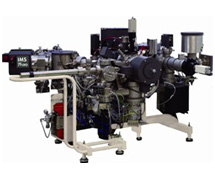
IMS 7f-AutoIMS 7f-Auto

Fully automated SIMS with unequaled detection limits, optimized for challenging applications such as glass, metals, ceramics, Si-based, III-V, II-VI, bulk materials, thin films. Keep Reading


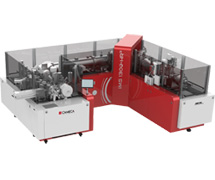
IMS 7f-GEO

IMS 7f-GEO

Compact, high throughput SIMS instrument for measurements in geological samples, i.e. stable isotopes, REE (Rare Earth Elements), trace elements... Keep Reading


IMS 1300-HR3

IMS 1300-HR³ - Large Geometry SIMS

Large Geometry SIMS microprobe with unequalled analytical performance for geoscience applications: stable isotopes, trace elements, geochronology, particle analysis... Keep Reading


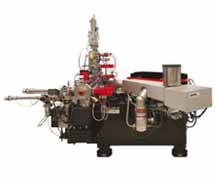
NanoSIMS 50L

NanoSIMS 50L

SIMS microprobe for ultra fine feature analysis in materials, geology, planetary and life sciences. Keep Reading


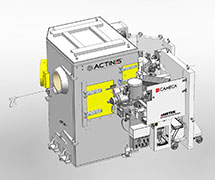
ACTINIS

ACTINIS - Shielded Ion Microprobe

Shielded SIMS analyzer for nuclear research & industry: safe, high precision analysis of highly radioactive materials. Keep Reading

  • Chia sẻ qua viber bài: Secondary Ion Mass Spectrometer SIMS
  • Chia sẻ qua reddit bài:Secondary Ion Mass Spectrometer SIMS

PRODUCTS

Loading...

RELATED PRODUCTS

Single Collector ICPMS Attom

The Nu AttoM incorporates a unique ion optics system which allows alteration of the ion trajectories within the magnet. This offers the advantage of beam deflection at constant acceleration energy and ESA voltages without inducing mass discrimination effects.
Xem thêm

Multi-collectors ICPMS Nu Plasma 3

Plasma 3 is a third generation Multi Collector ICP Mass Spectrometer (MC-ICP-MS), designed to provide the best possible precision and accuracy for simultaneous isotopic ion detection. The instrument retains the unique, patented, variable dispersion Zoom lens enabling the simultaneous measurement of the isotopes of elements from lithium to the actinide series on its static collector array of sixteen Faraday detectors and up to six ion-counting detectors.
Xem thêm

Sapphire MC-ICPMS

Sapphire is a third generation Multi Collector ICP Mass Spectrometer (MC-ICP-MS), designed to provide the best possible precision and accuracy for simultaneous isotopic ion detection. The instrument retains the unique, patented, variable dispersion Zoom lens enabling the simultaneous measurement of the isotopes of elements from lithium to the actinide series on its static collector array of sixteen Faraday detectors and up to six ion-counting detectors. Ground potential analyser operation provides ease of use and maintenance with excellent reliability. The unique feature of the Sapphire is the Dual Ion Beam paths; a Low Energy path with a Collision/Reaction cell and a High Energy path which by-passes the Collision/Reaction Cell and provides a classical MC-ICPMS optics system.
Xem thêm

UPDATE

WE HAVE MOVED TO
WWW.adst.vn

THANKS FOR YOUR VISIT OUR NEW WEBSITE!

VISIT NOW