Unveiling Water Distribution in the Early Solar System with LG-SIMS
Webinar presented by Laurette Piani, a CNRS Researcher at CRPG (France), specializing in studying meteorites to understand the distribution of water in the forming solar system.
↓ Duration: 49 minutes
Click here to view
Isotopic and elemental characterization of nuclear and radioactive materials at the micrometric scale
Exploring the application of SIMS for nuclear and radioactive materials with Anne-Laure Fauré, an experienced analytical chemistry researcher and Assistant Laboratory Manager at CEA-DAM.
↓ Download our one-pager highlighting the key takeaways.
Click here to view
Investigating the formation conditions of the first solids in the solar system using Large-Geometry SIMS
In this webinar Dr Yves Marrocchi, CRPG, Nancy, France presents recent petrographic observations and isotopic measurements of chondrules which shed new light on the timing of chondrule formation and how recycling processes during disk evolution led to the formation of chondrules.
↓ Duration: 52 minutes
Click here to view
Part 1: Pb-isotope imaging of ultra-high temperature zircon, the most widely used mineral in geochronology.
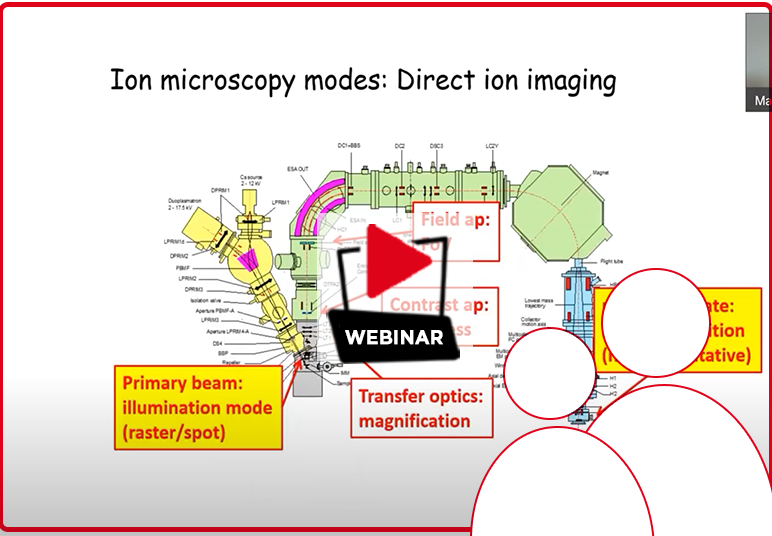
Prof. Martin Whitehouse, Swedish Museum of Natural History, Stockholm, details the benefits of both direct and Scanning Ion Imaging (SII) at high mass resolution illustrated by recent case studies . Recording of a seminar hosted by IUAC, Delhi, India. ↓ Approx. 30 minutes
Click here to view
Part 2: Full U-Pb analysis from complex imaged zircon grains from the early Earth and the Moon as well as terrestrial impact craters
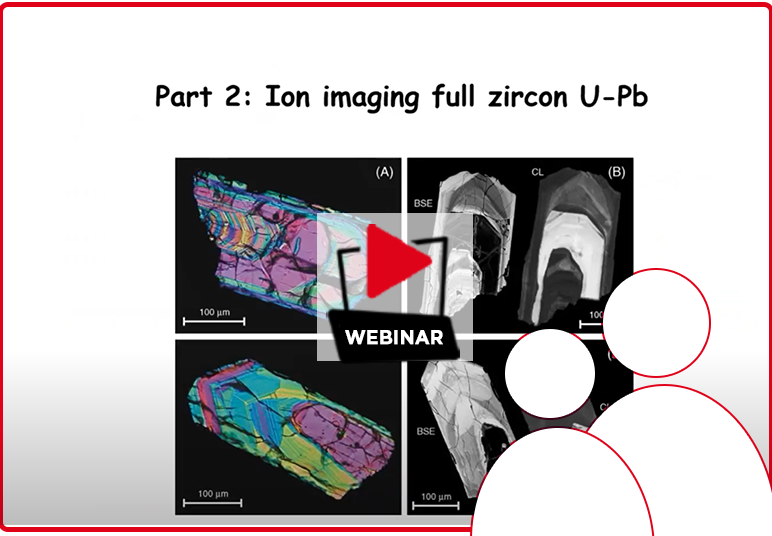
Prof. Martin Whitehouse, Swedish Museum of Natural History, Stockholm, details the benefits of both direct and Scanning Ion Imaging (SII) at high mass resolution illustrated by recent case studies. Recording of a seminar hosted by IUAC, Delhi, India. ↓ Approx. 7 minutes
Click here to view
Part 3: Pb-Pb dating of lunar basalts and determination of lunar chemical geodynamics.
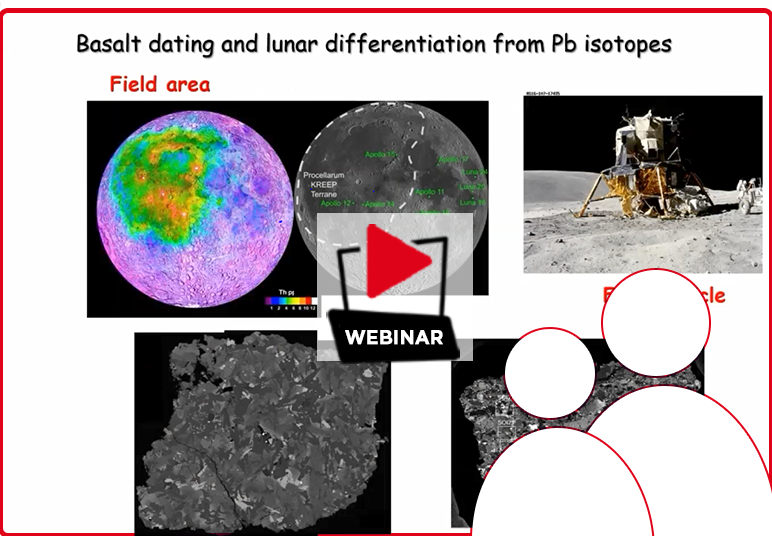
Prof. Martin Whitehouse, Swedish Museum of Natural History, Stockholm, details the benefits of both direct and Scanning Ion Imaging (SII) at high mass resolution illustrated by recent case studies. Recording of a seminar hosted by IUAC, Delhi, India.
↓ Duration: 10 minutes
Click here to view
Triple Oxygen Isotope Measurements by Multi-Collector Isotope by Multi-Collector large Geometry SIMS
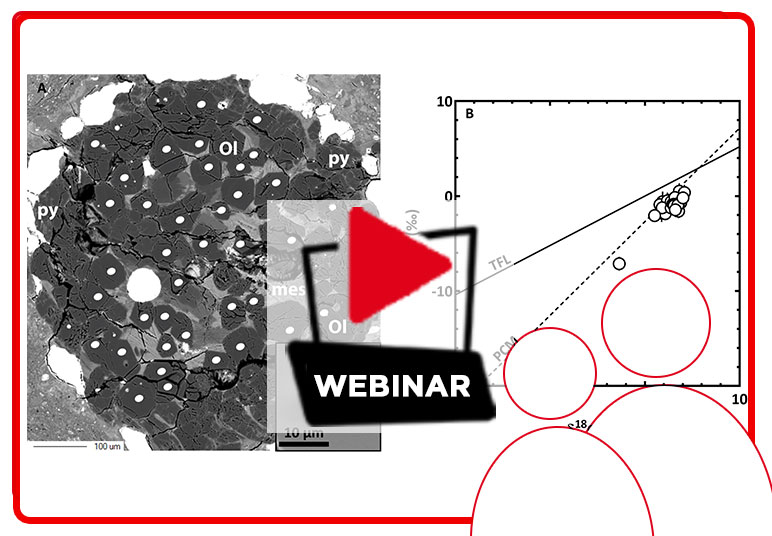
Large-geometry SIMS equipped with a multicollector system (LG-SIMS) provide the best performance for geo- and cosmochemistry applications as they provide in situ analysis with both high spatial resolution and high precision. Recently, latest generations LG-SIMS were equipped with low noise 1012Ω resistor Faraday Cup preamplifier boards optimized for the measurement of low intensity signals. This talk describes an innovative path for triple oxygen isotope analyses, based on the measurement of the 17O minor isotope on a Faraday Cup detector equipped with a 1012Ω preamplifier board. This new analytical method allows nowadays to routinely measure oxygen isotopic ratios (18O/16O and 17O/16O) in various matrices with a precision (internal error and reproducibility) better than 0.5‰ (2σ), a spatial resolution smaller than 10 μm and in a few minutes per analysis. This work is the result of a collaboration between CAMECA and the CRPG Nancy lab in France.
↓ Duration : 15 minutes
Click here to view


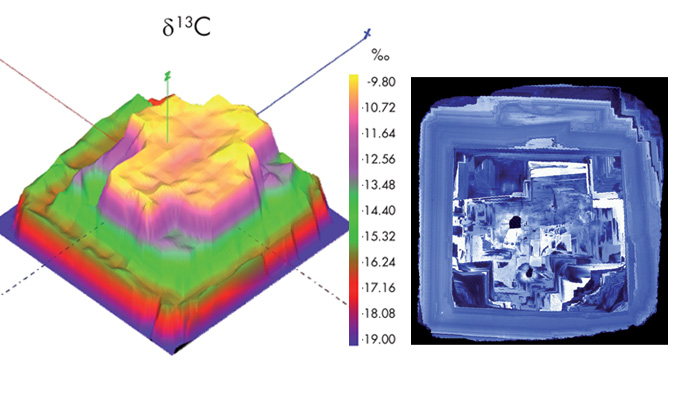

 Brochure - IMS 1300-HR3


