Khối phổ ion thứ cấp 1300-HR³

Large Geometry Ion Microprobe for Geosciences

The IMS 1300-HR³ is a large geometry ion microprobe delivering unequalled analytical performance for a wide range of geoscience applications: tracking geological processes using stable isotopes, dating minerals, determining the presence and distribution of trace elements. Its high sensitivity and high lateral resolution also make it the tool of choice to search and measure uranium particles for nuclear safeguards purposes.

A unique combination of High Reproducibility at High spatial Resolution and High mass Resolution

With the new IMS 1300-HR³, CAMECA greatly improves the performance of its large geometry SIMS, already a market leader, and now offers the geoscience community a unique combination of High Reproducibility at High spatial Resolution and High mass Resolution.The tool addresses the growing demand for small scale, in situ isotopic measurements at high precision and productivity, opening a wide range of research directions, from stable isotopes, geochronology and trace elements to small particles and beyond.

Key features inherited from the IMS 1280-HR and previous model:

  • Large geometry design to provide optimum sensitivity at high mass resolution
  • Versatile multicollector system for highest precision isotope measurements
  • Dual primary ion sources for analysis of positive & negative secondary ions
  • Superior ion imaging capabilities (microprobe and microscope modes)
  • Enhanced magnet control system for high reproducibility at high mass resolution
  • Remote operation, full automation, powerful application-dedicated software


Advances & benefits of the IMS 1300-HR³:

  • New RF-plasma oxygen source with greatly enhanced beam density and current stability, dramatically improving spatial resolution, data reproducibility and throughput
  • New motorized storage chamber with automated sample height (Z) adjustment significantly increasing analysis precision, ease-of-use and productivity
  • UV-light microscope for improved optical image resolution, together with dedicated software for easy sample navigation
  • 1012 Ω resistor Faraday cup boards: low noise electrometry system for measuring low counting rates


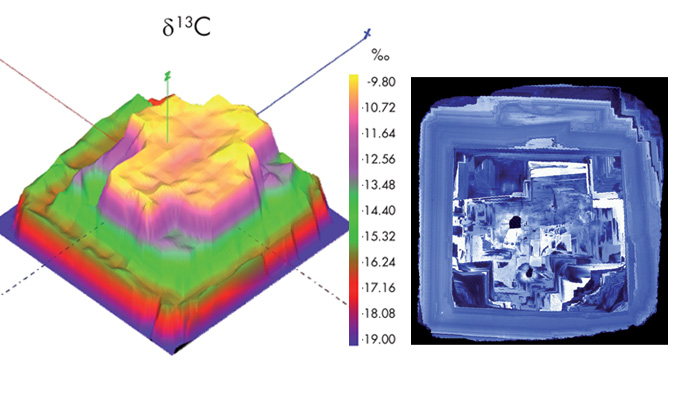
Carbon isotopes in diamond mapped with LG SIMS

Stable isotopes: Carbon (LG-SIMS)

Our Large-Geometry SIMS provides excellent precision and reproducibility in mapping minerals for minor variations in isotopic ratios.


Keep Reading

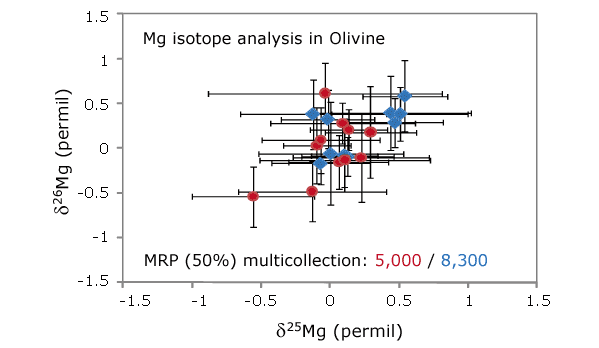
Magnesium in Olivine - stable isotope analysis with Large Geometry SIMS

Stable isotopes: Magnesium (LG SIMS)

The simultaneous detection system available on our Large-Geometry SIMS provides key advantages for the analysis of Mg isotopes.


Keep Reading

SIMS U-Th-Pb dating of zircon grains from lost continent

Geochronology - Confirming the existence of an Ancient ‘lost continent’ (LG-SIMS)

Zircon grains extracted from a volcanic rock on Mauritius were dated around 3 Ga old using U-Th-Pb age determination methods on large-geometry SIMS... far too old to belong to the island of Mauritius! 

Keep Reading

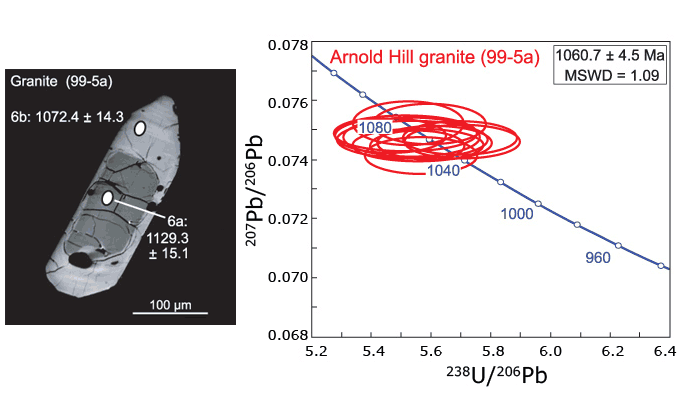
In situ U-Pb geochronology of zircon

U-Pb geochronology in zircon (LG-SIMS)

The IMS 1300-HR3 large geometry SIMS performs in situ dating of old and very young zircon with excellent precision. 

Keep Reading

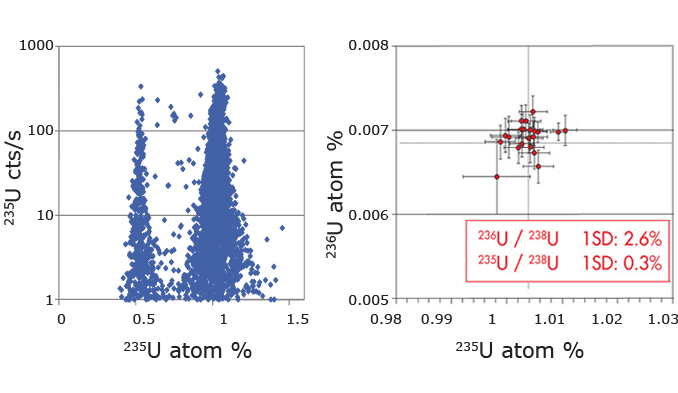
Uranium isotope analysis on nuclear particles with LG SIMS

Nuclear safeguards: U isotope analysis (LG-SIMS)

Our Large Geometry SIMS is used in major international safeguards agencies to perform high precision Uranium isotopic analysis on nuclear particles.


Keep Reading


Unveiling Water Distribution in the Early Solar System with LG-SIMS
Webinar presented by Laurette Piani, a CNRS Researcher at CRPG (France), specializing in studying meteorites to understand the distribution of water in the forming solar system.
↓ Duration: 49 minutes

Click here to view

Isotopic and elemental characterization of nuclear and radioactive materials at the micrometric scale
Exploring the application of SIMS for nuclear and radioactive materials with Anne-Laure Fauré, an experienced analytical chemistry researcher and Assistant Laboratory Manager at CEA-DAM.
↓ Download our one-pager highlighting the key takeaways.

Click here to view

Investigating the formation conditions of the first solids in the solar system using Large-Geometry SIMS
In this webinar Dr Yves Marrocchi, CRPG, Nancy, France presents recent petrographic observations and isotopic measurements of chondrules which shed new light on the timing of chondrule formation and how recycling processes during disk evolution led to the formation of chondrules.
↓ Duration: 52 minutes

Click here to view

Part 1: Pb-isotope imaging of ultra-high temperature zircon, the most widely used mineral in geochronology.
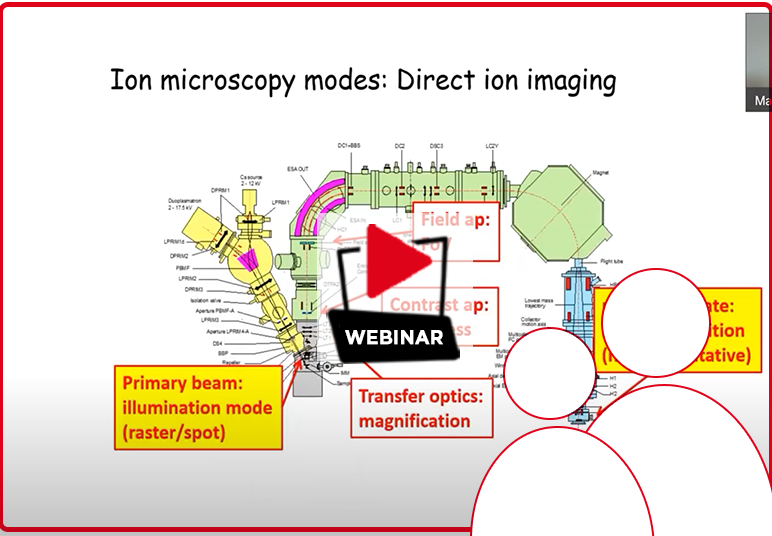
Prof. Martin Whitehouse, Swedish Museum of Natural History, Stockholm, details the benefits of both direct and Scanning Ion Imaging (SII) at high mass resolution illustrated by recent case studies . Recording of a seminar hosted by IUAC, Delhi, India. ↓ Approx. 30 minutes

Click here to view

Part 2: Full U-Pb analysis from complex imaged zircon grains from the early Earth and the Moon as well as terrestrial impact craters
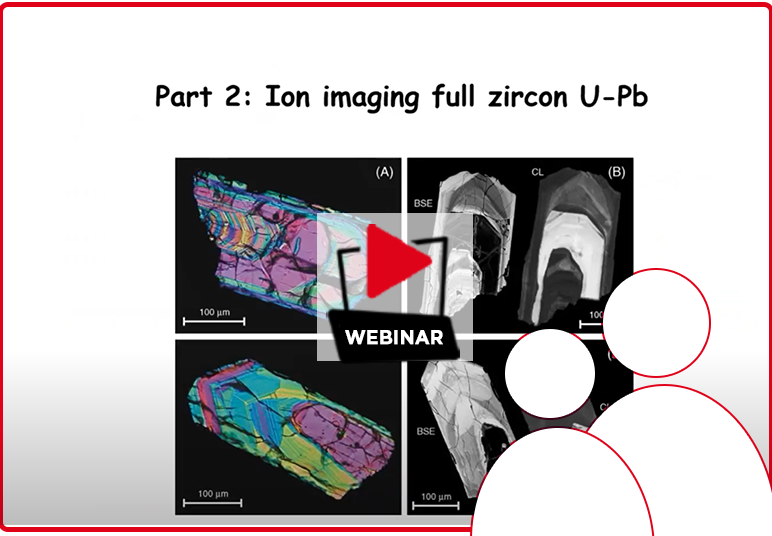
Prof. Martin Whitehouse, Swedish Museum of Natural History, Stockholm, details the benefits of both direct and Scanning Ion Imaging (SII) at high mass resolution illustrated by recent case studies. Recording of a seminar hosted by IUAC, Delhi, India. ↓ Approx. 7 minutes

Click here to view

Part 3: Pb-Pb dating of lunar basalts and determination of lunar chemical geodynamics.
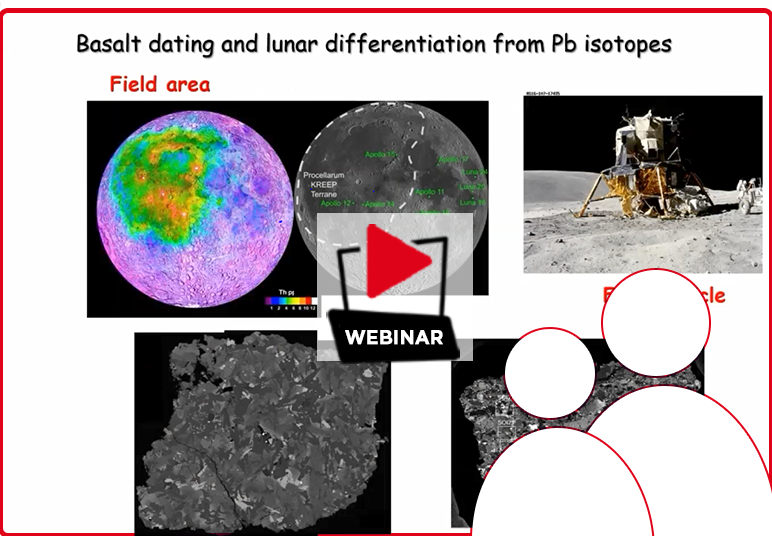
Prof. Martin Whitehouse, Swedish Museum of Natural History, Stockholm, details the benefits of both direct and Scanning Ion Imaging (SII) at high mass resolution illustrated by recent case studies. Recording of a seminar hosted by IUAC, Delhi, India.
↓ Duration: 10 minutes

Click here to view

Triple Oxygen Isotope Measurements by Multi-Collector Isotope by Multi-Collector large Geometry SIMS
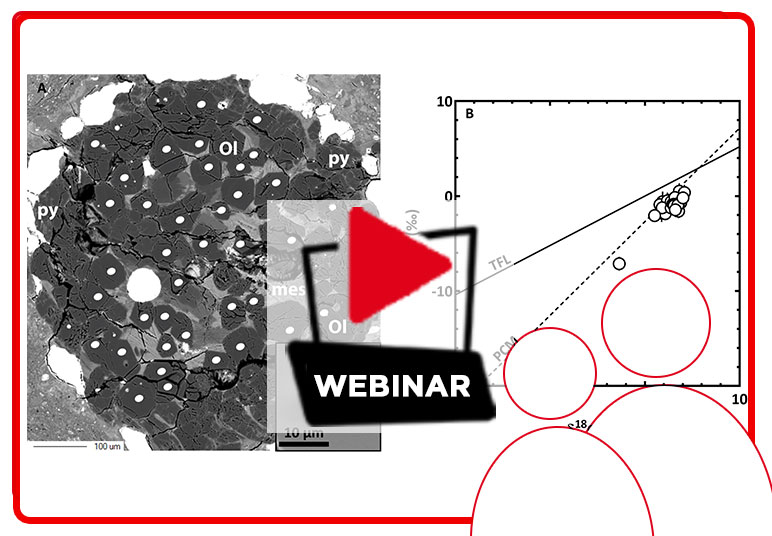
Large-geometry SIMS equipped with a multicollector system (LG-SIMS) provide the best performance for geo- and cosmochemistry applications as they provide in situ analysis with both high spatial resolution and high precision. Recently, latest generations LG-SIMS were equipped with low noise 1012Ω resistor Faraday Cup preamplifier boards optimized for the measurement of low intensity signals. This talk describes an innovative path for triple oxygen isotope analyses, based on the measurement of the 17O minor isotope on a Faraday Cup detector equipped with a 1012Ω preamplifier board. This new analytical method allows nowadays to routinely measure oxygen isotopic ratios (18O/16O and 17O/16O) in various matrices with a precision (internal error and reproducibility) better than 0.5‰ (2σ), a spatial resolution smaller than 10 μm and in a few minutes per analysis. This work is the result of a collaboration between CAMECA and the CRPG Nancy lab in France.
↓ Duration : 15 minutes

Click here to view

An Excel spreadsheet compiling scientific research articles using Large Geometry SIMS (IMS 1270, IMS 1280, IMS 1280-HR, IMS 1300-HR³) data is available for download. The articles are ordered by main applications as below and are easily searchable with Excel word search functions:

  • Stable isotopes
  • Geochronology
  • Trace elements
  • Nuclear forensics

Download spreadsheet here

Do not hesitate to contact us at cameca.info@ametek.com if you can not access some pdf files on your own. You are also more than welcome to send us any missing references, pdf and supplements!

  • WinCurve dataprocessing sofware

    WinCurve

    Specifically developed for CAMECA SIMS instruments, WinCurve offers powerful data processing & visualization capabilities in a user-friendly environment.


    Keep Reading

  • WinImage Software

    WinImage II

    Specifically developed for CAMECA SIMS instruments, WinImage II offers powerful image visualization, processing & printing capabilities under PC-Windows™ Environment.


    Keep Reading

  • APM Software

    APM

    Automated Particle Measurement (APM) is CAMECA software tool allowing fast screening of millions of particles, particle detection and isotopic characterization.


    Keep Reading

  • Chia sẻ qua viber bài: Khối phổ ion thứ cấp 1300-HR³
  • Chia sẻ qua reddit bài:Khối phổ ion thứ cấp 1300-HR³

sản phẩm

Loading...

Sản phẩm liên quan

Hệ thống Quang khắc không mặt nạ đầu dò nhiệt NanoFrazor

NanoFrazor dùng công nghệ khắc nhiệt không mặt nạ (t-SPL) với đầu dò siêu nhọn, tạo cấu trúc nano chính xác cao, không cần chùm điện tử hay mặt nạ đắt tiền. Độ sâu khắc sai số <1nm, tích hợp kiểm tra in-situ, hỗ trợ grayscale 3D cho quang tử nano, cảm biến lượng tử, màng sinh học. Module Decapede 10 đầu dò giúp tăng thông lượng gấp 10 lần.
Xem thêm

Hệ thống Quang khắc không mặt nạ sản xuất khối lượng lớn MLA 300

MLA 300 được tối ưu cho sản xuất khối lượng lớn. Công nghệ Spatial Light Modulator (SLM) cho phép hiệu chỉnh biến dạng theo từng die, tự động lấy nét theo bề mặt cong, tương thích với SECS/GEM. Loại bỏ hoàn toàn chi phí và rắc rối của mask vật lý. Ứng dụng trong sản xuất MEMS, cảm biến, ASIC, advanced packaging, power electronics.
Xem thêm

Hệ thống Quang khắc không mặt nạ Grayscale DWL 2000 GS / 4000 GS

DWL 2000 GS / 4000 GS đáp ứng chuẩn công nghiệp, hỗ trợ xuất CAD với 1023 mức xám. Công nghệ Grayscale độc quyền từ Heidelberg Instruments cho phép tạo cấu trúc 2.5D và vi thấu kính với độ nhám bề mặt xuống 5nm. Giải pháp tối ưu cho chế tạo hologram, bộ khuếch tán ánh sáng và thấu kính Fresnel trong nghiên cứu quang tử, vi quang học.
Xem thêm