NanoSIMS 50L

NanoSIMS 50L cung cấp đồng thời các chỉ số hiệu suất chính mà chỉ có thể thu được riêng lẻ với bất kỳ công cụ hoặc kỹ thuật đã biết nào khác:

Độ phân giải không gian phân tích cao (xuống tới 50 nanomet)
Độ nhạy cao (ppm trong hình ảnh phần tử)
Độ phân giải khối lượng cao (M/dM),
Mua lại song song bảy khối lượng
Thu thập nhanh (chế độ DC, không xung)
Phân tích các mẫu dẫn điện mà không gặp vấn đề gì.
Và nhờ những cải tiến gần đây, giờ đây có thể đạt được khả năng tái tạo tỷ lệ đồng vị khoảng vài phần mười permil.

Các lĩnh vực ứng dụng mở rộng
Vi trùng học:
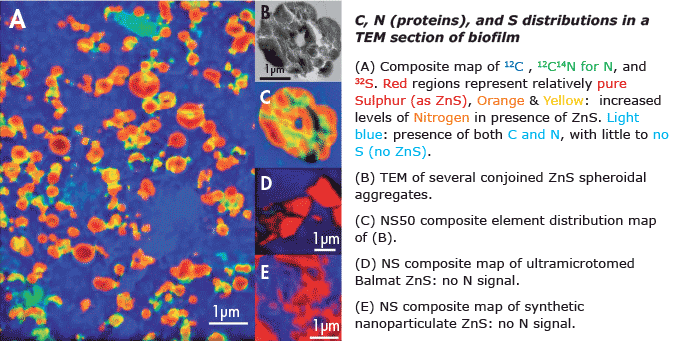
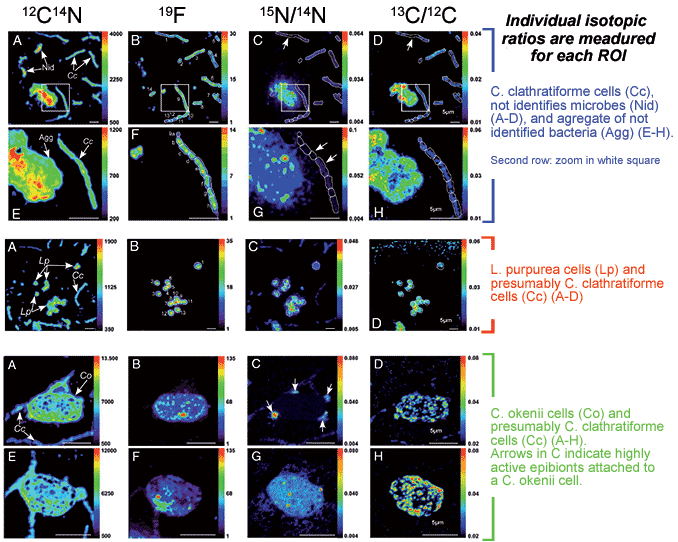
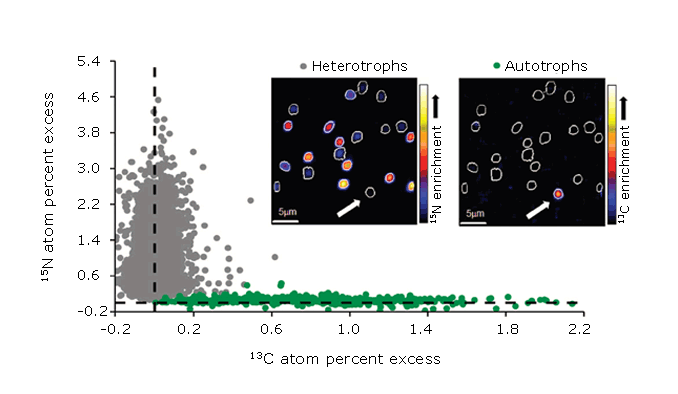
NanoSIMS 50L mở ra những khả năng mới để kết hợp nhận dạng phát sinh loài (với FISH hoặc El-FISH) và chức năng trao đổi chất (sử dụng ghi nhãn đồng vị ổn định) của các tế bào đơn lẻ trong các nghiên cứu về cộng đồng vi sinh vật hỗn hợp từ môi trường.

Sinh học tế bào:
Độ phân giải 50nm và khả năng tỷ lệ đồng vị của NanoSIMS 50L cho phép đo lường sự tích lũy và dòng chảy trong tế bào của các phân tử được đánh dấu bằng đồng vị ổn định

Khoa học địa chất và vũ trụ:

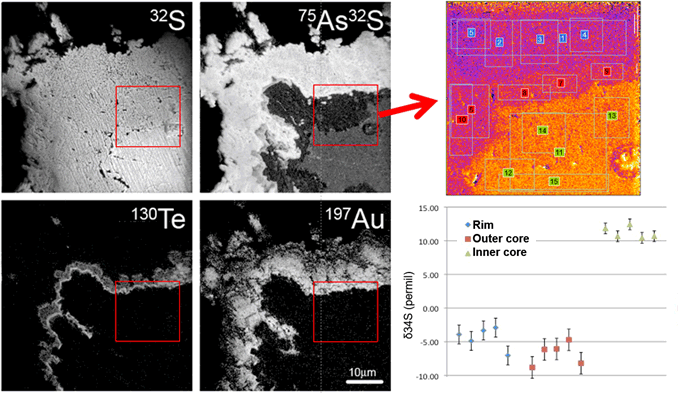
NanoSIMS 50L cho phép đo đồng vị và nguyên tố chính xác ở các khu vực sâu dưới micron, hạt hoặc vùi từ các hạt bụi liên hành tinh, thiên thạch và các phần khoáng chất. Hoạt động ở nhiều cấu hình Faraday Cup và với kích thước điểm vài µm, nó mang lại các phép đo tỷ lệ đồng vị với độ chính xác và khả năng tái tạo bên ngoài xuống đến vài phần mười permil.

Nghiên cứu vật liệu:

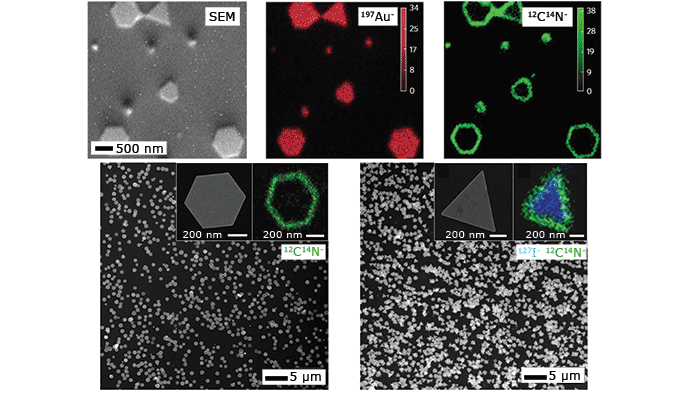
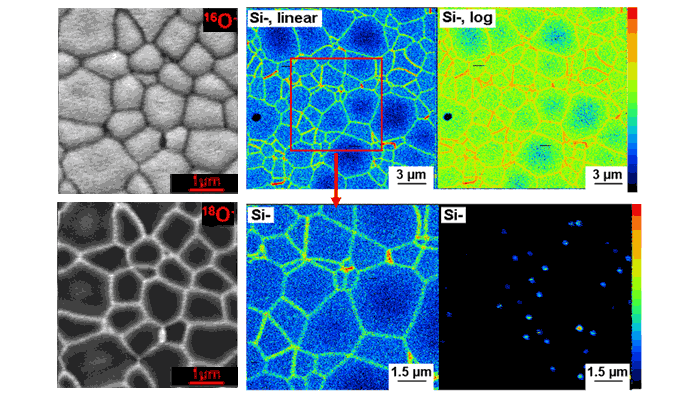
Nhờ độ nhạy cao ở độ phân giải khối lớn (không nhiễu khối), NanoSIMS 50L cho phép định lượng & chụp ảnh nguyên tố vi lượng (chất pha tạp) với độ phân giải bên SIMS 50nm, ngay cả trong các vật liệu cách điện. Tất cả các nguyên tố ngoại trừ khí hiếm đều có thể truy cập được, từ hydro đến plutonium.

NanoSIMS 50L ban đầu được thiết kế bởi Pr. G. Slodzian, Đại học Paris Sud, Pháp.

  • Revealing the intracellular distributions of biomolecules with a novel NanoSIMS-based methodology

    Melanie Brunet, Ph.D. candidate in the Department of Chemical and Biomolecular Engineering at the University of Illinois Urbana−Champaign, working under the guidance of Prof. Mary Kraft, will introduce you to new NanoSIMS-based methodology that significantly enhances the accuracy of intracellular biomolecule visualization. Key take aways include: • Advanced Depth Correction • Accuracy in Imaging • Validation and Impact • Research Applications. .
    ↓ Duration: 30 minutes

    Click here to view
  • Improving the targeting of ASO therapeutic by NanoSIMS sub-cellular imaging

    Cécile Becquart, post-doctoral fellow at AstraZeneca, presents recent advances in Antisense Oligonucleotides (ASOs) and the use of NanoSIMS to image and quantify the distribution and accumulation of ASOs within cells. Key take aways include: • Review challenges in terms of delivery of ASOs to specific tissues and inefficient escape from endolysosomal compartments which restrict their use in the clinic • Understand the mechanisms underlying how ASOs enter cells and exit the endolysosomal space • Learn about the specifics NanoSIMS sub-cellular quantitative imaging .
     Duration: 18 minutes

    Click here to view
  • Lithium-ion battery research with NanoSIMS

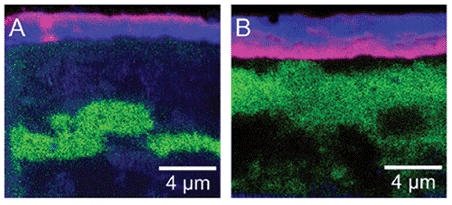
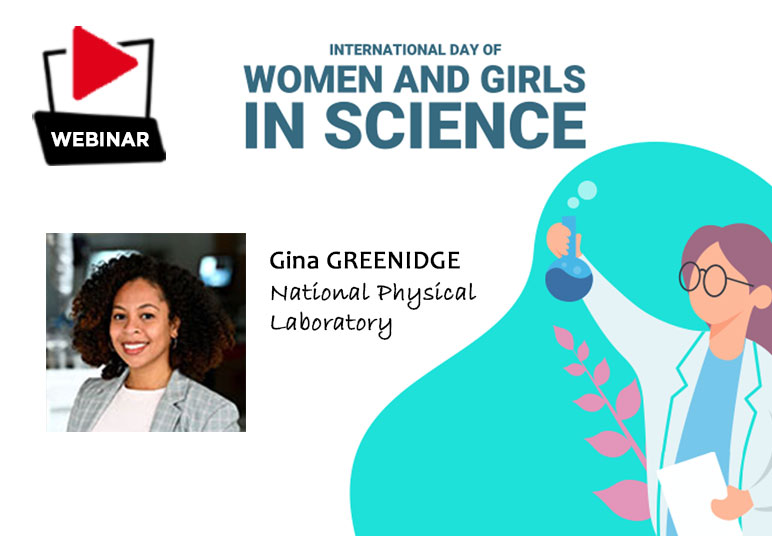
    Gina Greenidge, Higher Scientist at the National Physical Laboratory (NPL), UK’s National Metrology Institute, presents a study nitrogen fixation in maize leaf chloroplasts, or the role of vitamin B5 on cancer tumor proliferation. Key take aways include: • Review the capabilities of the NanoSIMS for nanoscale chemical mapping in LIB samples • Observe the collocation of fluorine and phosphorus, and the increase in Li, P and F signals for aged LIB samples • Gain insight into LIB anode degradation processes and the challenges that lie ahead for enabling batteries with longer life-time and higher performane .
    ↓ Duration: 32 minutes

    Click here to view
  • Unveiling drug targets inside the “black box” of the cell with NanoSIMS

    In this webinar Michael Kurczy discusses the development of the DrugSIMS™ platform. From the original blue sky initiative to embed a NanoSIMS in a pharmaceutical company to the eventual intracellular quantification of nucleic acid based therapeutics.
    ↓ Duration: 18 minutes

    Click here to view
  • NanoSIMS Imaging of the Brain in Health and Disease

    In this webinar, Dr Silvio Rizzoli will present NanoSIMS Imaging of the Brain in Health and Disease.
    ↓ Duration : 41 minutes

    Click here to view
  • Subcellular measurements of cell turnover and metabolism with NanoSIMS

    Pr. Steinhauser reports on his investigation of metabolic processes including glucose, lipid and nucleic acid metabolism, and cell turnover with NanoSIMS.
    ↓ Duration: 49 minutes

    Click here to view
  •  
A knew kind of invisible gold in pyrite

Pyrite article

Learn from Denis Fougerouse how two CAMECA instruments contributed to the discovery of a new kind of “invisible gold”!
NanoSIMS 50L ion microprobe at The University of Western Australia and the LEAP 3D Atom Probe Curtin University enabled to locate gold in pyrite crystals’ nanoscale defects - dislocations that are 100 000 times smaller that the width of a human hair!

  • Chia sẻ qua viber bài: NanoSIMS 50L
  • Chia sẻ qua reddit bài:NanoSIMS 50L

sản phẩm

Loading...

Sản phẩm liên quan

Hệ thống Quang khắc không mặt nạ đầu dò nhiệt NanoFrazor

NanoFrazor dùng công nghệ khắc nhiệt không mặt nạ (t-SPL) với đầu dò siêu nhọn, tạo cấu trúc nano chính xác cao, không cần chùm điện tử hay mặt nạ đắt tiền. Độ sâu khắc sai số <1nm, tích hợp kiểm tra in-situ, hỗ trợ grayscale 3D cho quang tử nano, cảm biến lượng tử, màng sinh học. Module Decapede 10 đầu dò giúp tăng thông lượng gấp 10 lần.
Xem thêm

Hệ thống Quang khắc không mặt nạ sản xuất khối lượng lớn MLA 300

MLA 300 được tối ưu cho sản xuất khối lượng lớn. Công nghệ Spatial Light Modulator (SLM) cho phép hiệu chỉnh biến dạng theo từng die, tự động lấy nét theo bề mặt cong, tương thích với SECS/GEM. Loại bỏ hoàn toàn chi phí và rắc rối của mask vật lý. Ứng dụng trong sản xuất MEMS, cảm biến, ASIC, advanced packaging, power electronics.
Xem thêm

Hệ thống Quang khắc không mặt nạ Grayscale DWL 2000 GS / 4000 GS

DWL 2000 GS / 4000 GS đáp ứng chuẩn công nghiệp, hỗ trợ xuất CAD với 1023 mức xám. Công nghệ Grayscale độc quyền từ Heidelberg Instruments cho phép tạo cấu trúc 2.5D và vi thấu kính với độ nhám bề mặt xuống 5nm. Giải pháp tối ưu cho chế tạo hologram, bộ khuếch tán ánh sáng và thấu kính Fresnel trong nghiên cứu quang tử, vi quang học.
Xem thêm